For most home cooks, the right chef knife size is 8 inches. It is long enough to slice a large onion or a boneless roast in one or two strokes and short enough to control in an ordinary kitchen. Choose a 6-inch blade if you work in a small space, prefer a light knife, or do mostly small, precise prep. Choose a 10-inch blade if you regularly prep large quantities or large produce and have the room to swing it. Length is measured along the blade, from heel to tip, not including the handle.
That answers the headline question. The rest of this guide covers what actually changes between sizes, the two dimensions most buyers forget, how Japanese millimeter sizes convert, and how blade length affects your sharpening gear.
Why 8 inches is the default
The 8-inch chef’s knife is the size the market is built around. Wikipedia’s kitchen knife entry (read September 27, 2026) says chef’s knives are most commonly available between 6 and 10 inches, with 8 inches “being the most common size.” The knife maker Made In describes its 8-inch as “the standard size for a Chef Knife” in its guide to chef knife size (read September 27, 2026), and says it can handle “almost any kitchen task from chopping onions to slicing meat.”
Standard does not mean best for everyone. It means an 8-inch blade is the safest guess when you know nothing else about the cook. If you know more about how you cook, you can do better.
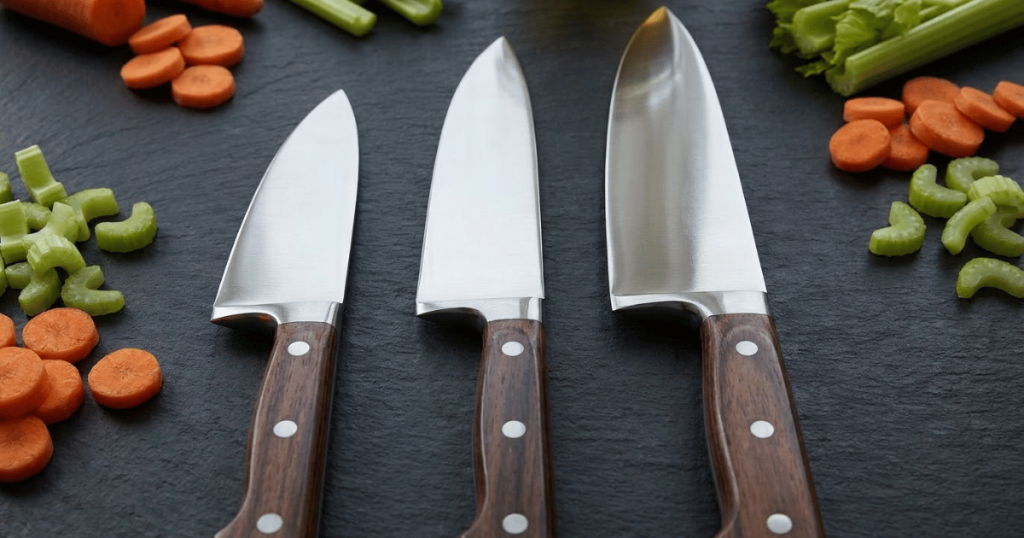
Chef knife size compared: 6 vs 8 vs 10 inches
| Size | Best for | Gives up | Typical cook |
|---|---|---|---|
| 6 inch | Control, small prep, tight spaces | Reach on large items like cabbage, squash or big roasts | Small kitchen, cooks for one or two, prefers a light knife |
| 8 inch | Almost everything at home | Nothing major; a slight compromise at both ends | Most home cooks, first serious knife |
| 10 inch | Large volumes, large produce, long slices | Maneuverability, and it needs more room to work | Batch cooks, large families, cooks with plenty of space |
The 6-inch chef’s knife
Made In says its 6-inch is “best suited for more precise tasks” and may give more control. A shorter blade is lighter and keeps the tip closer to your hand, so small jobs feel easier. The trade-off shows up with anything wider than the blade: a large cabbage, a butternut squash or a watermelon needs several sawing strokes, which is slower and less clean. For many cooks a 6-inch works best as a second knife beside a paring knife, not as the only large blade.
The 8-inch chef’s knife
The 8-inch is long enough that most vegetables and boneless proteins fit under the blade, and short enough for a standard kitchen. If you cook a mix of everything, buy this size first and only change it if you find yourself consistently wishing for more reach or more control.
The 10-inch chef’s knife
A longer blade covers more food per stroke, which speeds up bulk prep and handles large items without sawing. It also carries more weight forward. That is useful momentum for some cooks and tiring for others. Made In notes that its 10-inch suits cooks with larger hands. Before you buy one, check that your workspace gives a 10-inch blade room to move without the tip or heel hitting a wall, a backsplash or the edge of your work surface.
Two dimensions most size guides skip
Length is only one of three measurements that decide how a chef’s knife feels.
Blade height at the heel
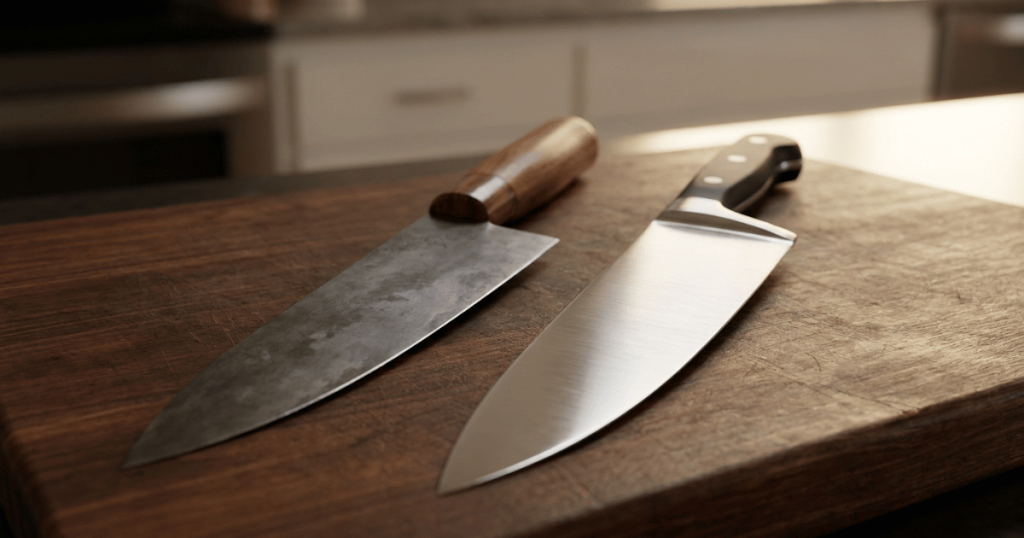
Height is the distance from the edge to the spine at the heel. A taller heel gives more knuckle clearance above the board, and it gives a wider face for scooping food. Two 8-inch knives can feel very different if one is noticeably taller. Western chef’s knives and Japanese gyutos often differ here, so compare heel height on the spec sheet, not just the length.
Weight and balance
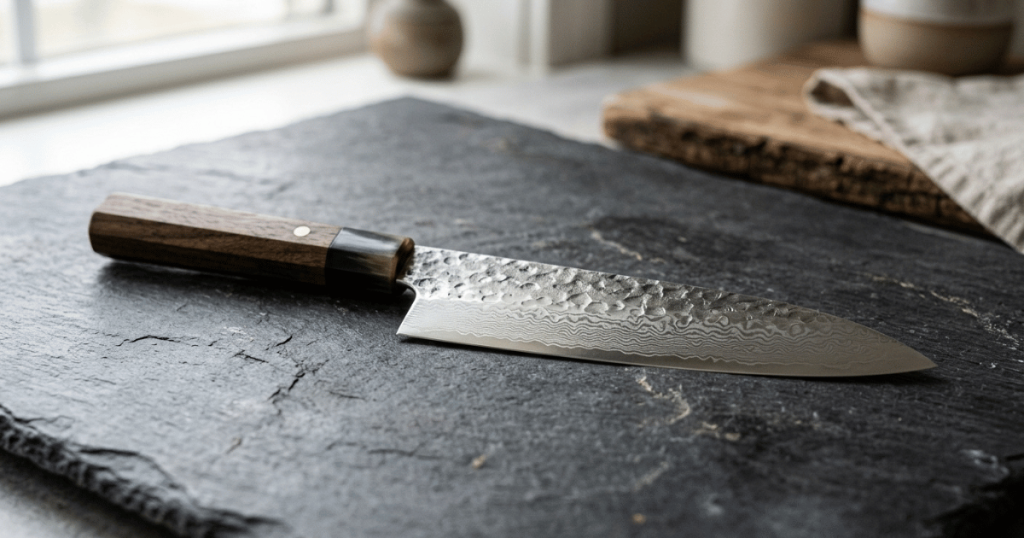
A heavy 8-inch knife can feel bigger than a light 10-inch. Weight depends on steel thickness, the bolster and the handle, not only on length. Made In lists blade length, heel size and the bolster as the properties to weigh. If you find heavy knives tiring, a lighter Japanese-style blade of the same length may suit you better than dropping down a size. Our guide to Japanese kitchen knives and what separates real from Japanese-style explains why those blades tend to be thinner.
Converting Japanese chef’s knife sizes
Japanese chef’s knives (gyutos) are usually listed in millimeters, which is where many buyers get confused. The conversion is straightforward arithmetic, 25.4 millimeters to the inch:
| Listed size | In inches (rounded) | Closest Western equivalent |
|---|---|---|
| 180 mm | About 7.1 in | Between a 6 and 8 inch |
| 210 mm | About 8.3 in | 8 inch |
| 240 mm | About 9.4 in | Between an 8 and 10 inch |
| 270 mm | About 10.6 in | 10 inch and up |
So a 210 mm gyuto is the rough counterpart of an 8-inch Western chef’s knife, and a 240 mm sits a little under 9.5 inches. Makers do not all measure the same way, so check the edge length each maker states on its spec sheet for that knife.
How to choose your size
Answer these questions in order. Stop at the first one that settles it.
- Is this your only large knife? If yes, lean toward 8 inches. It covers the widest range with the fewest regrets.
- Is your workspace cramped? A small counter or a narrow prep area favors 6 or 8 inches. A long blade you cannot move freely is slower, not faster.
- Do you prep in volume? Weekly batch cooking, large families or lots of large produce favor 10 inches, or a 240 mm gyuto.
- Do heavy knives tire you? Look at weight before length. A lighter 8-inch often solves the problem better than a heavier 6-inch.
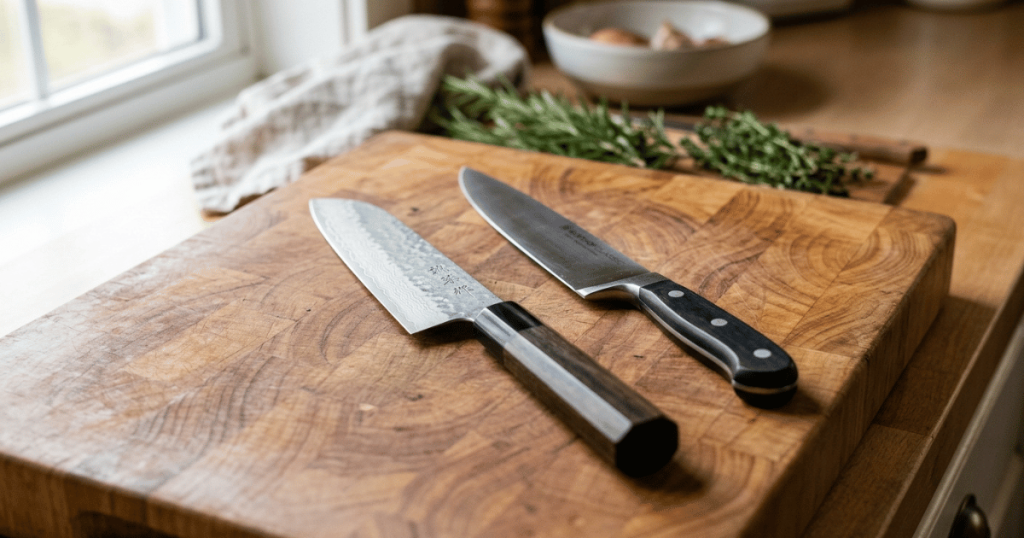
- Do you already own a santoku? A santoku is usually shorter than a chef’s knife, so pairing it with a longer chef’s knife, rather than a second short one, gives you range.
If you are still unsure after these, buy 8 inches. It is the size most cooks keep using.
Size affects your sharpening and honing gear
A longer knife asks a little more of your equipment. On a whetstone, a 10-inch blade is sharpened in sections, and keeping the angle steady along the full length takes practice; our step-by-step on sharpening kitchen knives with a whetstone walks through the full process. A honing rod should be at least as long as the blade you use it on, so a 10-inch knife needs a longer rod than a 6-inch one. Our guide on how to use a honing steel explains angle and pressure.
What size does not fix
A bigger knife will not make a dull knife cut, and a smaller one will not make a poorly balanced knife comfortable. If your current chef’s knife feels wrong, check the edge and the weight before you blame the length. For choosing across types, steels and budgets together, see our overview of how to choose kitchen knives by type, steel and budget.
FAQ
What is the most common chef knife size?
Eight inches. Wikipedia’s kitchen knife entry lists chef’s knives as commonly available between 6 and 10 inches, with 8 inches the most common, and makers such as Made In treat 8 inches as their standard size.
Is a 10-inch chef’s knife too big for a home kitchen?
Not if you have the space and prep large quantities or large produce. It becomes a problem when your workspace is small, because a blade you cannot move freely is slower and harder to control than a shorter one.
Is a 6-inch chef’s knife big enough?
For small prep, small households and tight kitchens, yes. It struggles with large items such as cabbage, squash and big roasts, which need several strokes. Many cooks use a 6-inch as a second knife beside an 8-inch.
What size gyuto equals an 8-inch chef’s knife?
A 210 mm gyuto, which works out to about 8.3 inches. A 240 mm gyuto is about 9.4 inches, between an 8-inch and a 10-inch Western chef’s knife.
How is chef knife length measured?
Along the blade, from the heel where the edge begins to the tip. The handle is not included, so two knives with the same listed length can differ in overall size.