
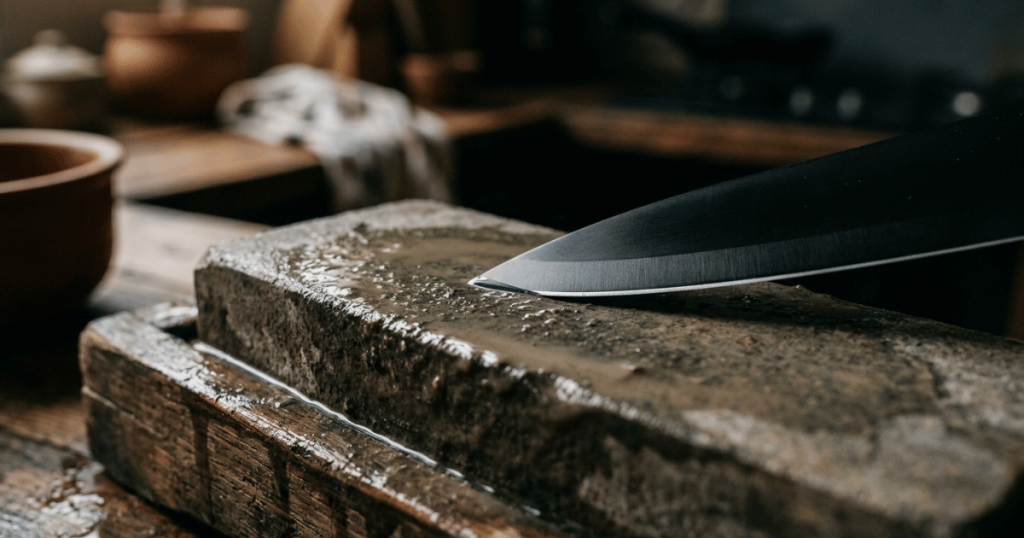
Sharpening Ceramic Knives: Why Your Whetstone Does Nothing
A ceramic blade is harder than the abrasive in an ordinary water stone, so the stone slides. Diamond is the only thing that cuts it, and the blade may snap.
A ceramic blade is harder than the abrasive in an ordinary water stone, so the stone slides. Diamond is the only thing that cuts it, and the blade may snap.
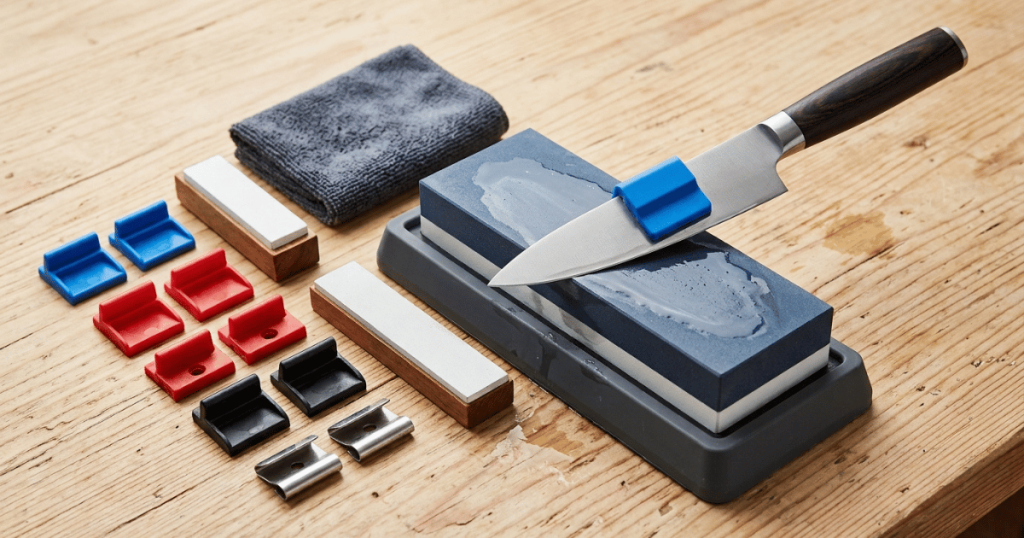
Yes, and with a cost. A guide holds the angle you cannot yet hold, and it also stops you learning the feel that would let you hold it. Where each type fits.
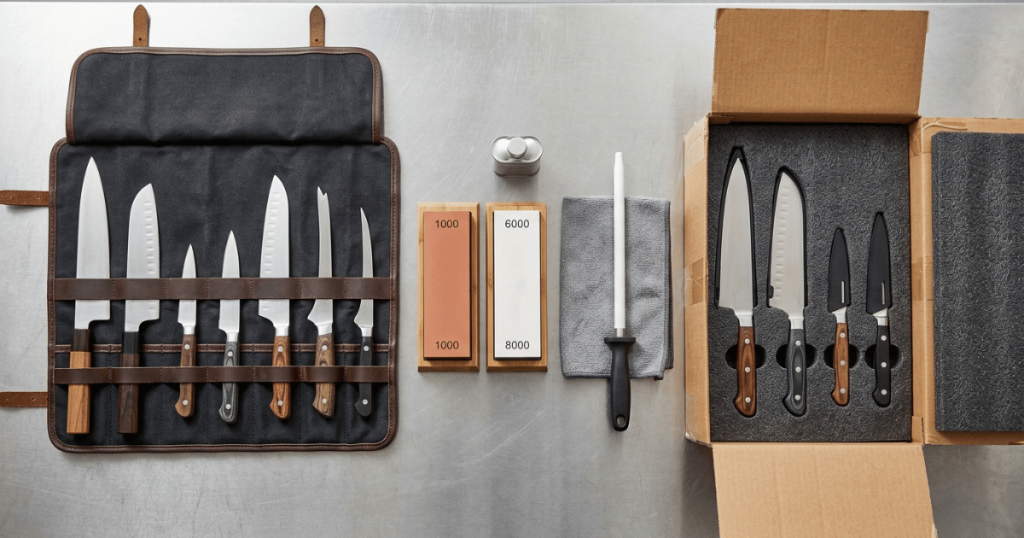
The question is not what it costs. It is what machine they use and how much steel it takes. Ten questions to ask before you hand over a knife you like.
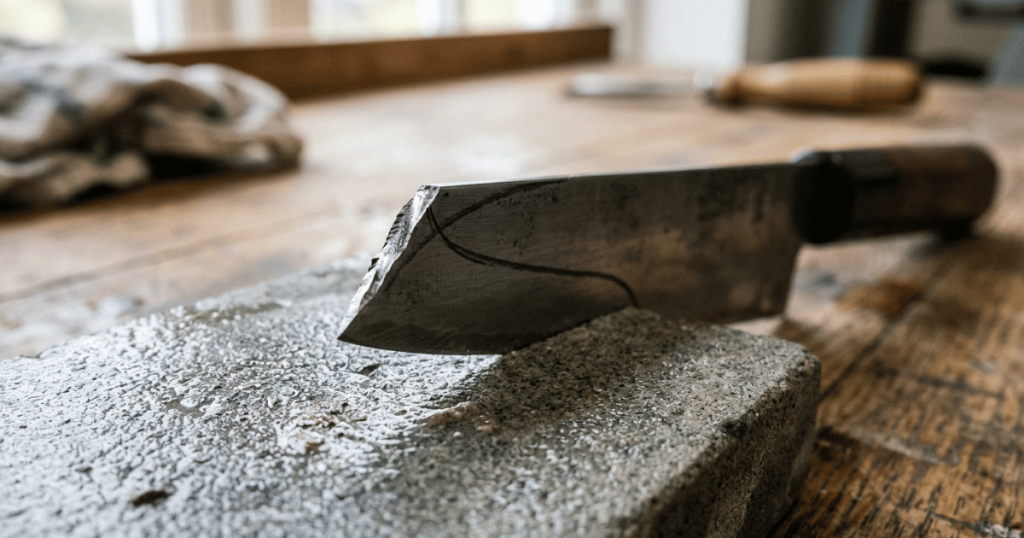
A snapped tip is rebuilt by grinding the spine down to meet the edge, not the edge up to meet the spine. Get that backwards and you shorten the knife twice.
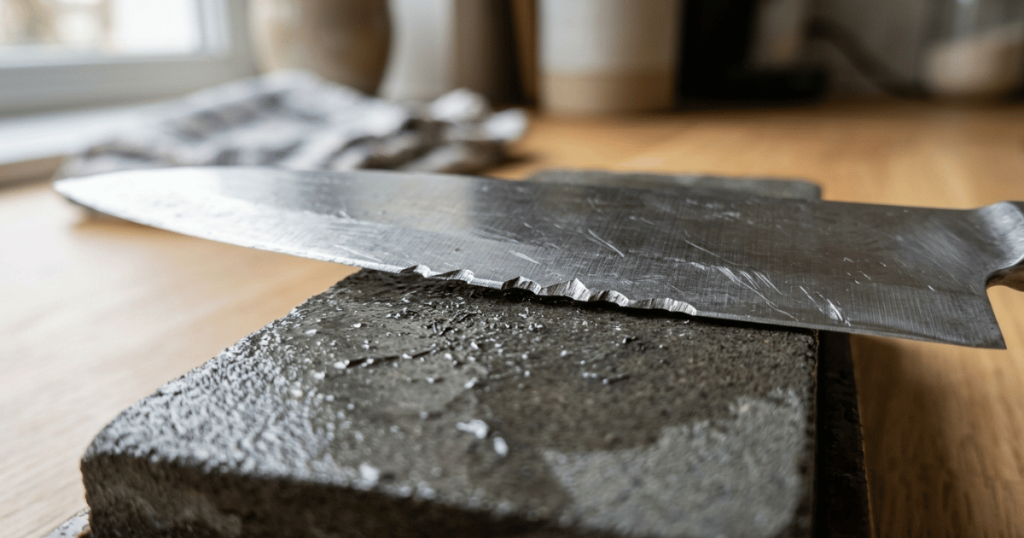
Repairing a chip means grinding the whole edge down to the bottom of it. The arithmetic that decides whether to do it, and the four chips to hand over.
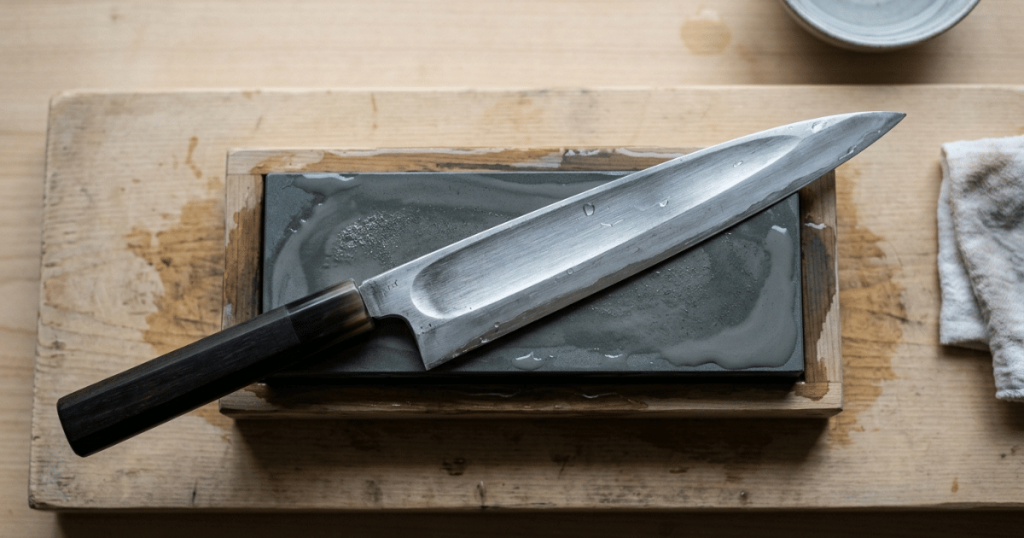
Yanagiba, deba and usuba are ground on one side, and the back has a hollow you must not grind out. What the urasuki is, and where an amateur ruins one.
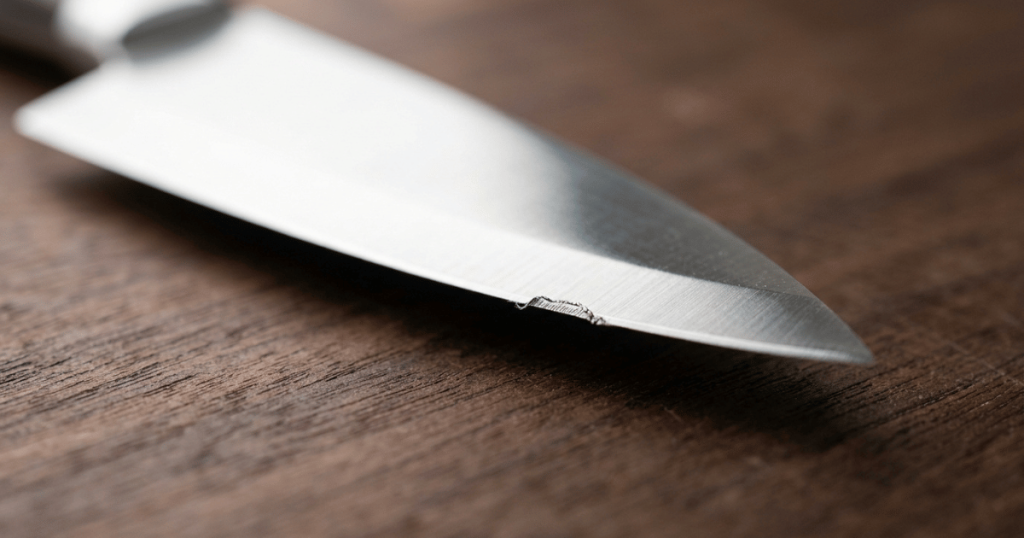
Sharp on the stone and dull on the first cut means the burr is still there. What a burr is, how to find it, and the two ways to take it off cleanly.
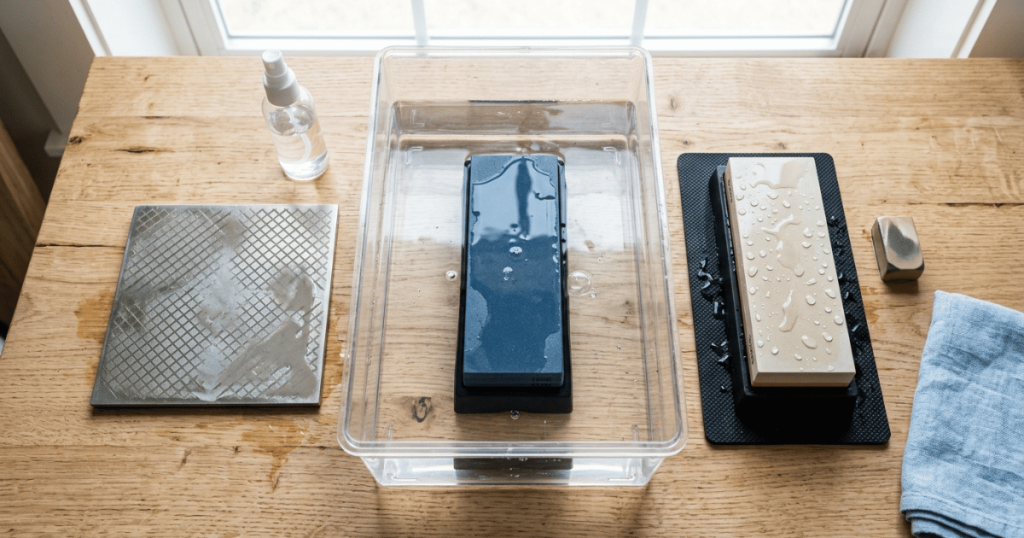
A dished stone sharpens a curve into your edge and you will blame your technique. How to tell which kind of stone you own, and how to keep it flat.
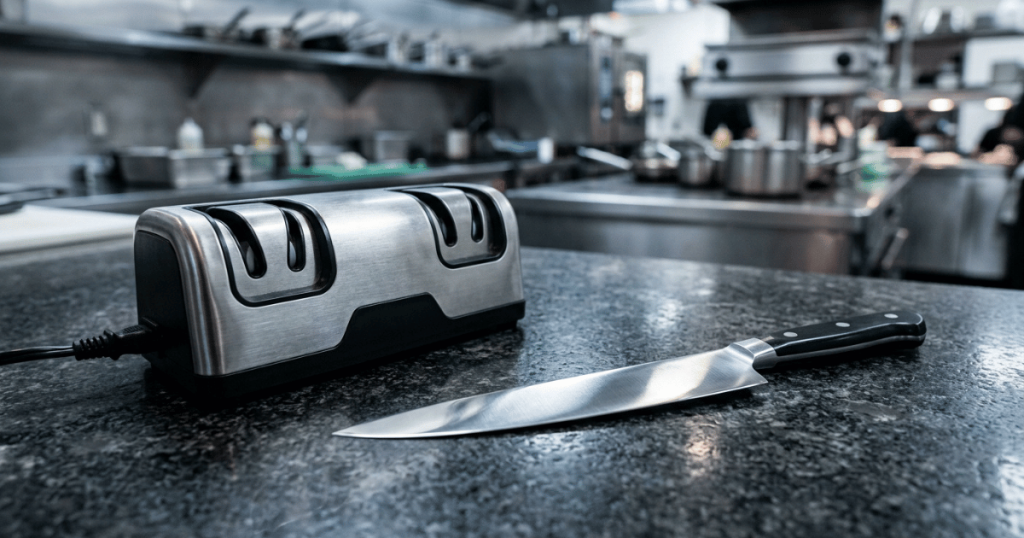
An electric sharpener removes steel whether or not the edge needs it. The stage order, the pass discipline, and the four knives that should never see one.