
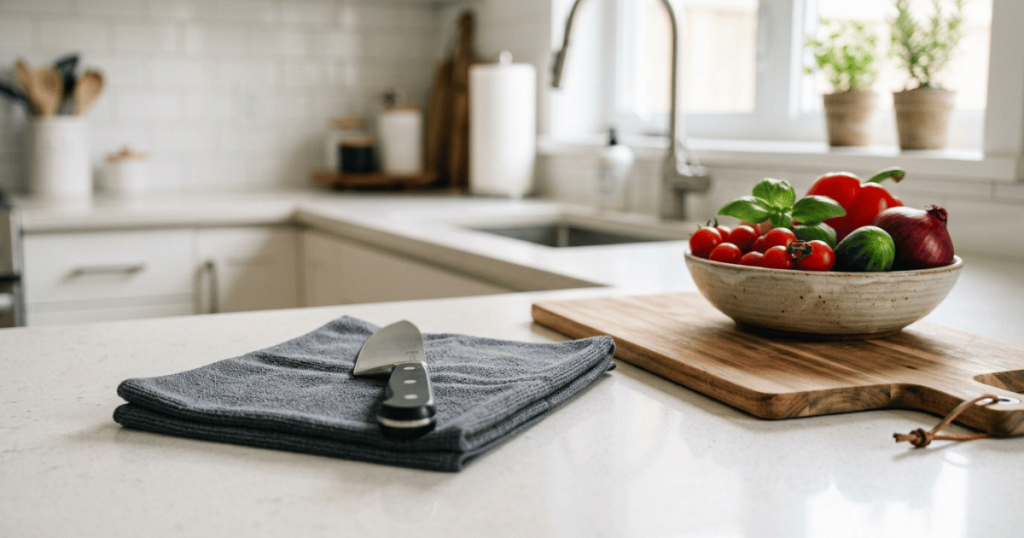
Kitchen Knife Safety: Carrying, Passing, Washing
Carry point down, never catch a falling knife, never leave one in a full sink. Home kitchen knife safety, plus an honest look at the dull-knife claim.
Carry point down, never catch a falling knife, never leave one in a full sink. Home kitchen knife safety, plus an honest look at the dull-knife claim.
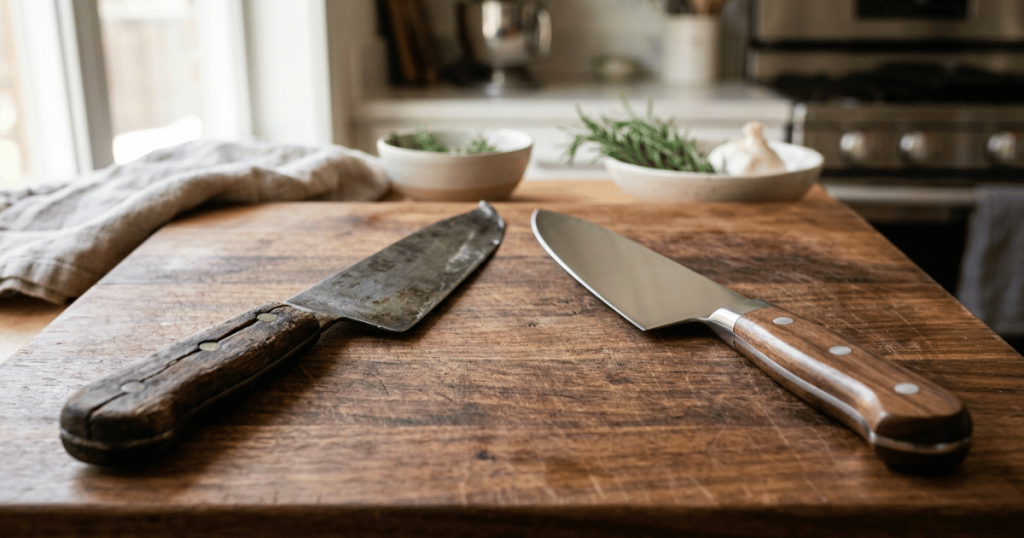
Chips, bent blades, pitting, loose handles and worn-out steel: which knife damage a sharpener can fix, which it cannot, and when to retire the knife.
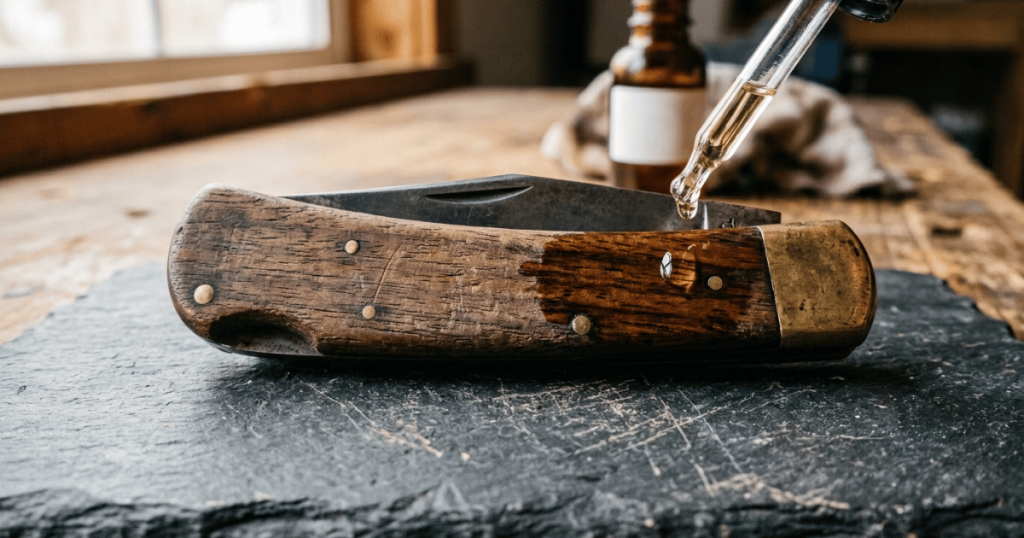
Why wooden knife handles crack, what oiling really does, which oil your own maker recommends, and when a loose handle makes a knife unsafe to keep using.
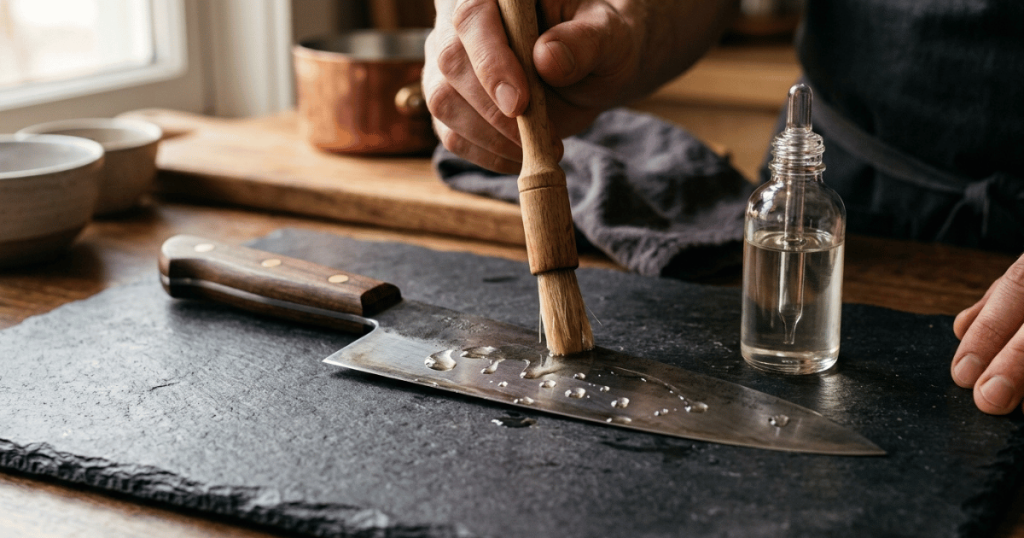
Mineral oil and camellia oil are the two traditional choices. What “food grade” rests on, why cooking oils fail, and when a knife needs oil.
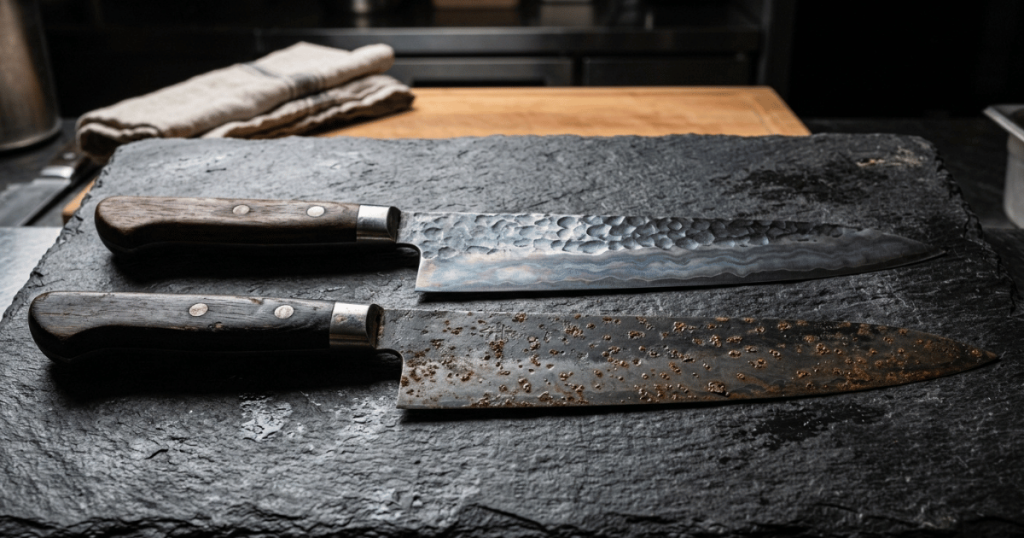
Gray, blue and brown on a carbon blade is patina, and it protects the steel. Orange that smears is rust. How to tell them apart before you scrub.
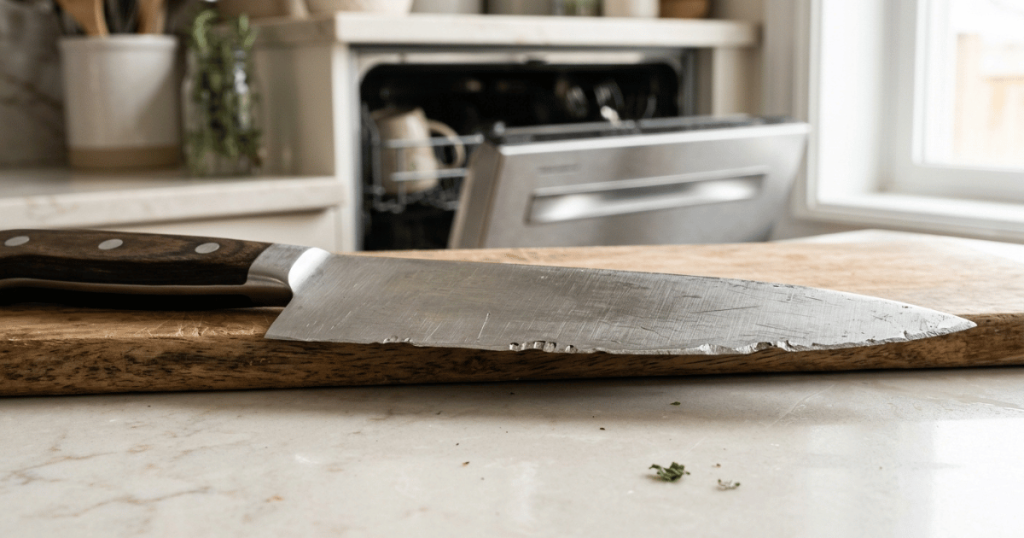
Four separate things damage a knife in a dishwasher, and the makers disagree. What Wusthof, Victorinox and Robert Welch each tell their own owners.
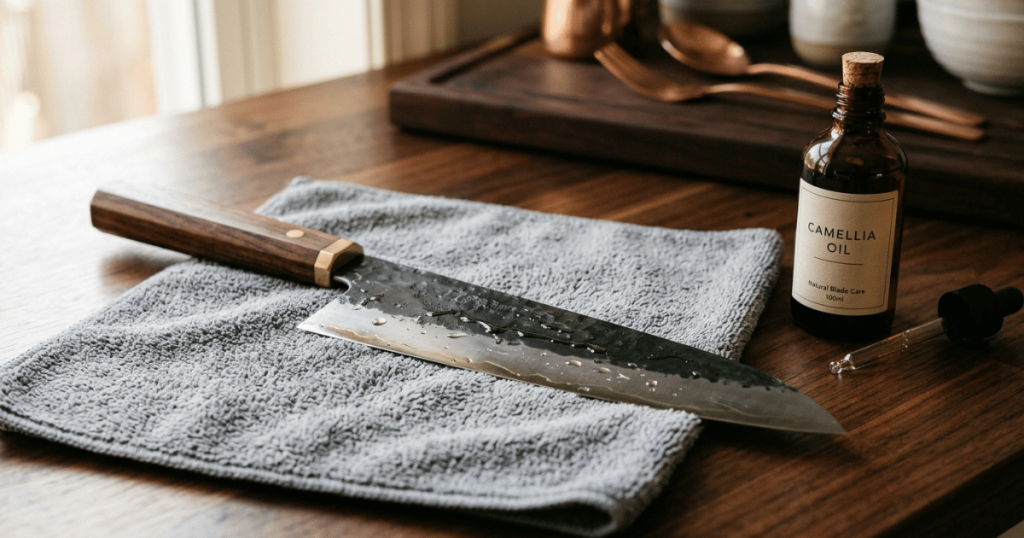
Rust starts where water sits. The moisture traps that rust kitchen knives, and what prevention really looks like for stainless and for carbon steel.
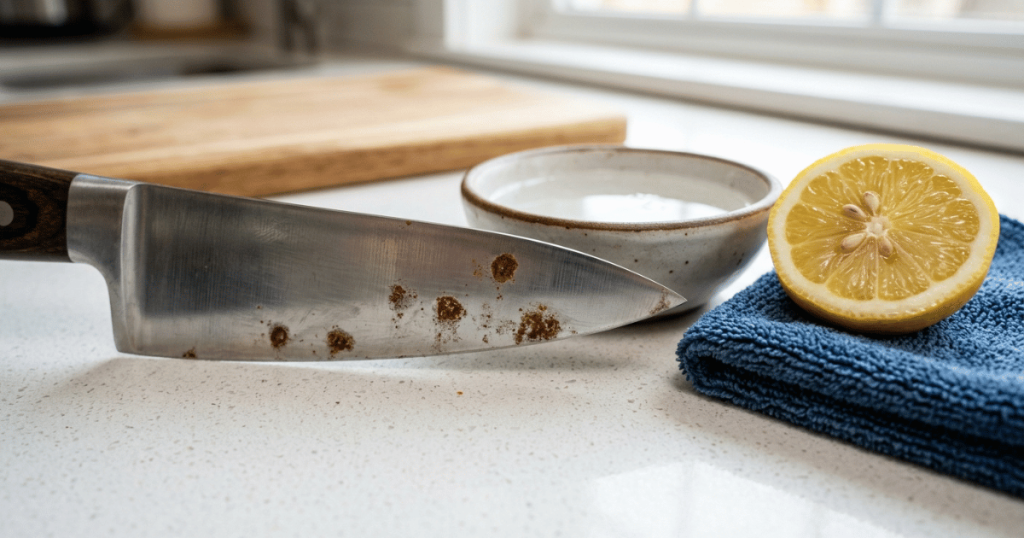
Tell surface rust from pitting and patina, take it off with the gentlest thing that works, and know the point where a rusted knife should be retired.
Hand wash, dry, hone, and read your own maker’s care page, because the makers disagree about dishwashers. Knife damage ranked by what comes back.