
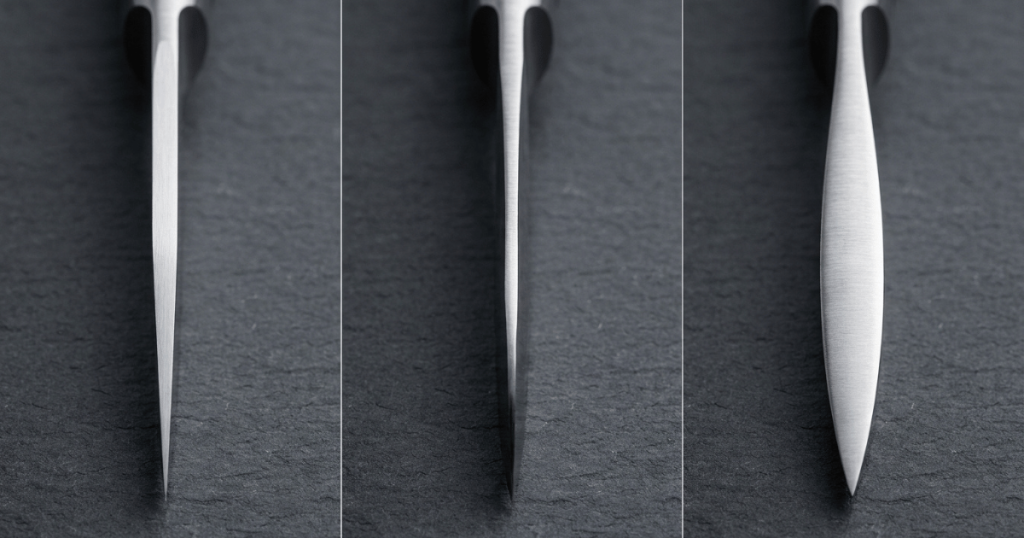
Knife Grind Types: Flat, Hollow, Convex and Why It Matters
Knife grind types explained: flat, hollow, convex, and thickness behind the edge, the reason two knives in the same steel cut so differently.
Knife grind types explained: flat, hollow, convex, and thickness behind the edge, the reason two knives in the same steel cut so differently.
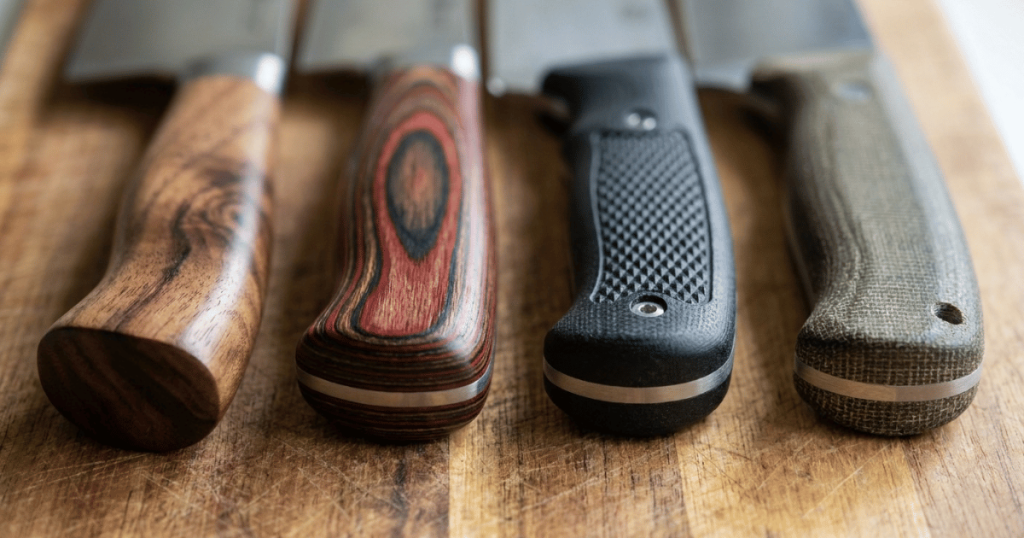
Knife handle materials compared by what they are made of and how each handles water, heat and the dishwasher, so you can pick one that lasts.
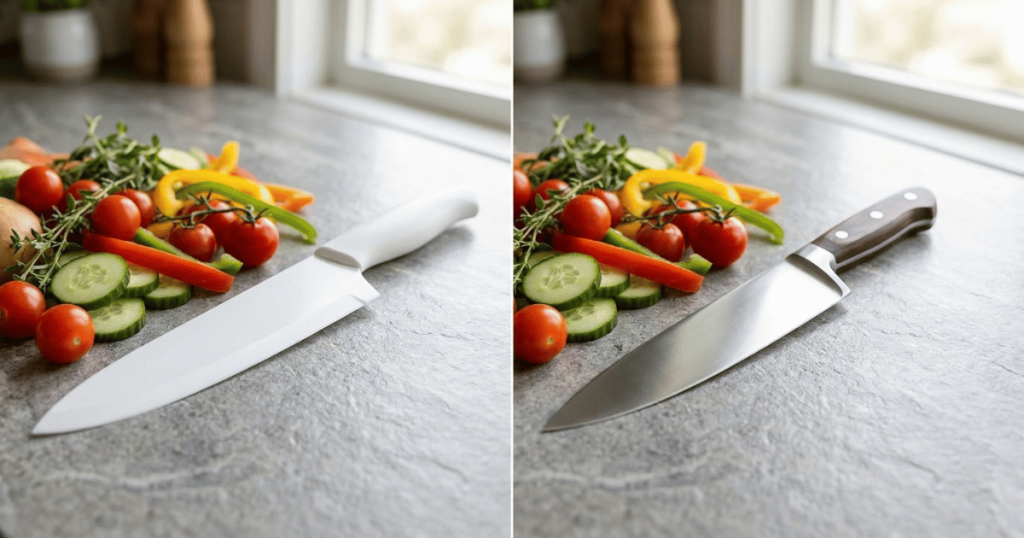
Ceramic knives vs steel, explained from the maker’s own material data: why zirconia stays sharp, why it chips, and which knife suits how you cook.
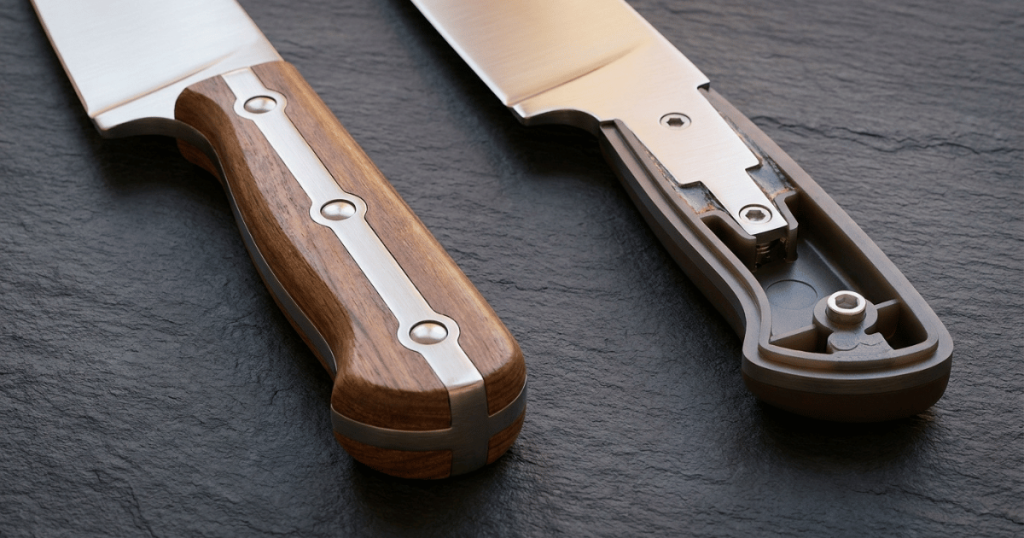
What a full tang knife really changes: balance, weight and how the handle fails. Learn to check any knife’s tang before you buy.
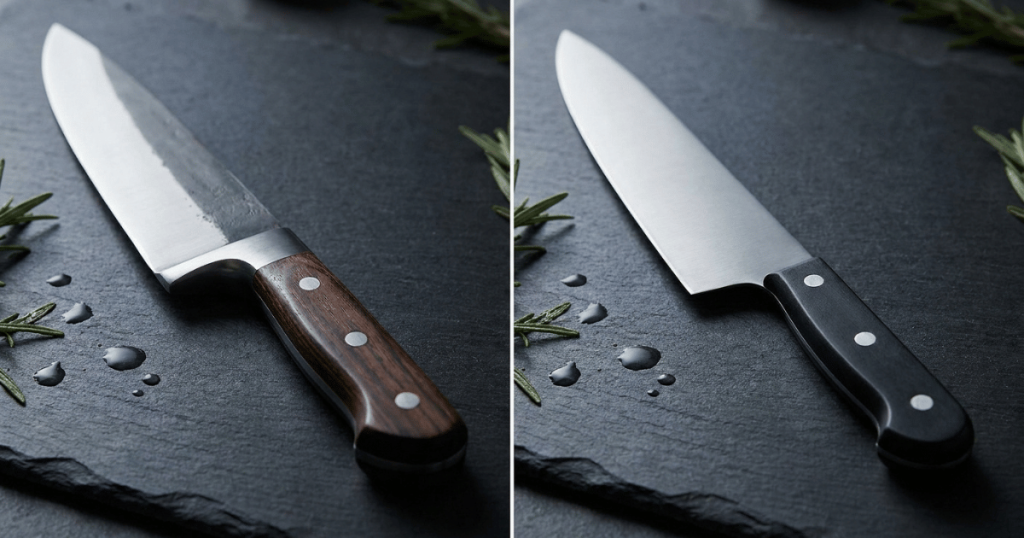
Forged vs stamped knives explained: what forging actually changes in the steel, and how to choose based on your budget and how you cook.
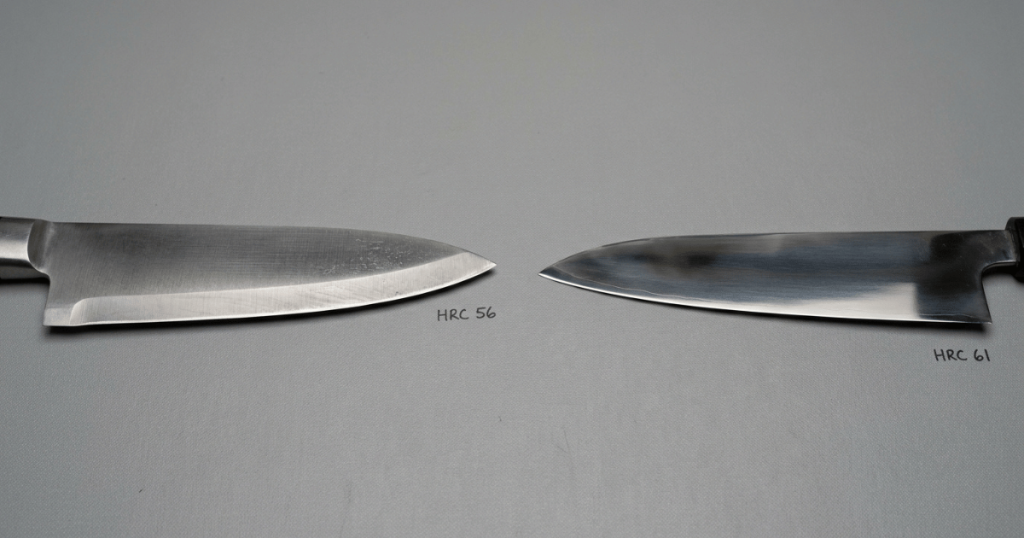
Knife hardness HRC explains why some blades hold an edge longer but chip easier. Compare HRC 56 vs 61 kitchen knives before you buy or sharpen.
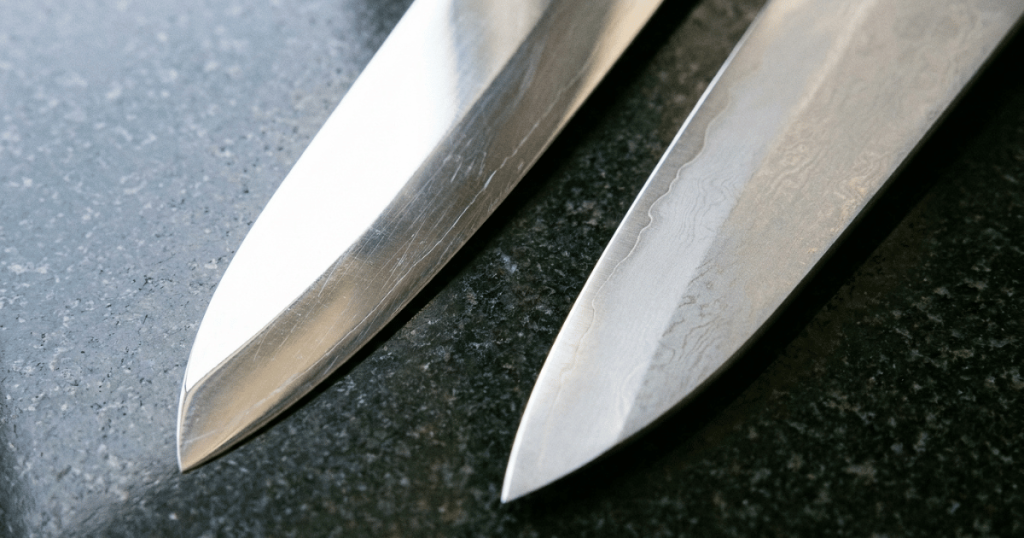
VG-10 vs AUS-10: compare composition, hardness and edge retention with sourced specs, so you pick the right knife steel for how you actually cook.
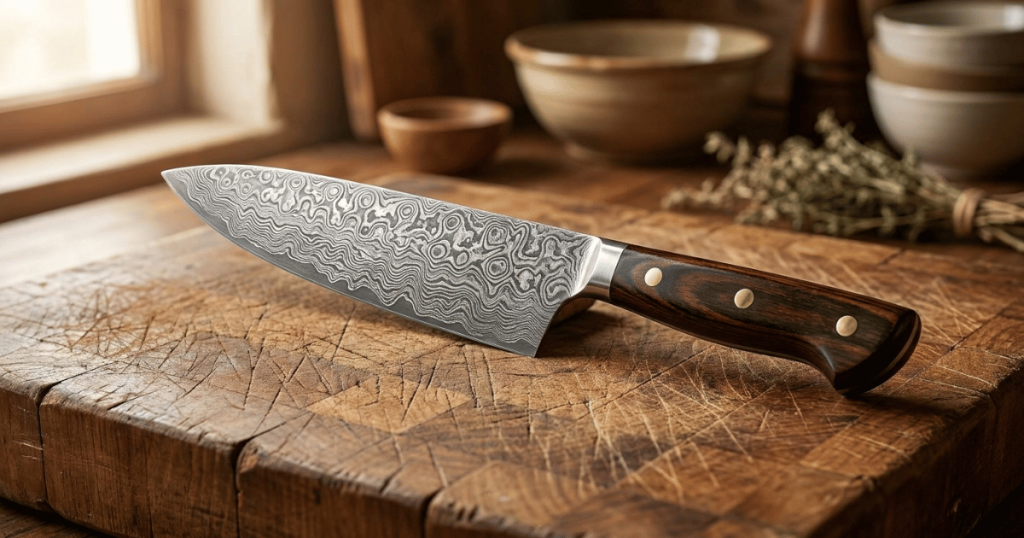
Damascus kitchen knives get their pattern from forging or etching, not sharpness. See what the core steel’s own spec tells you before buying.
High carbon stainless steel knives aren’t one grade. Learn what the label really means, see real steel datasheets, and check what’s actually in yours.